
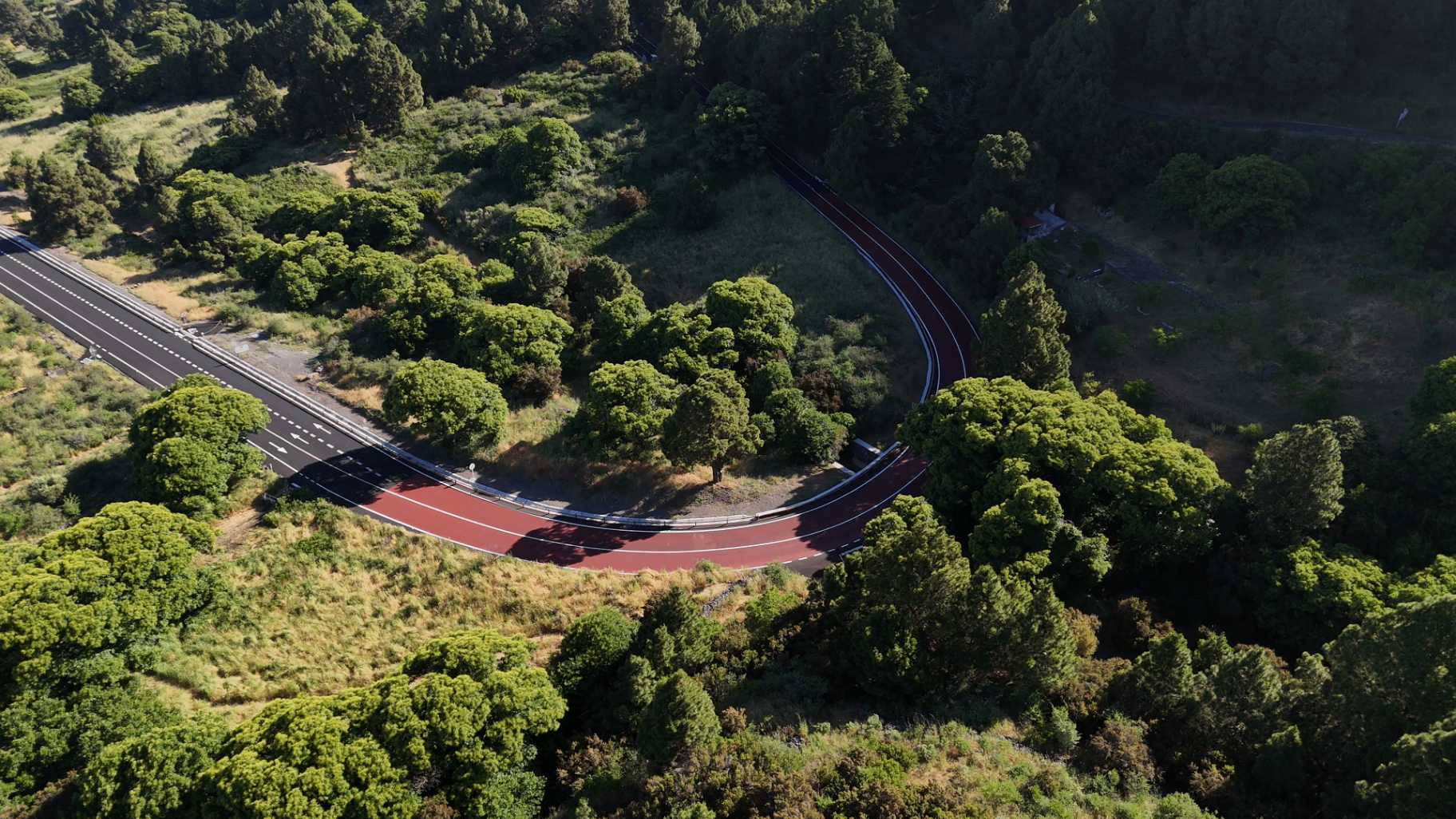
When a curve concentrates more risk than it seems
Every day thousands of drivers travel conventional roads without thinking about it. Yet there are specific points on the road network where the probability of an accident is significantly higher than on the rest of the route.
These are the well-known black spots or, in technical terms, Accident Concentration Sections (TCA).
Although we usually associate accidents with distractions, excessive speed or human error, the reality is that infrastructure also plays a fundamental role in road safety. A road's design, signage, visibility and, especially, pavement conditions can make the difference between keeping control of the vehicle or losing it in a fraction of a second.
And if there is one scenario where all these factors converge, it is the curve.
Road casualties in Spain: the weight of conventional roads
According to the latest data published by Spain's General Directorate of Traffic (DGT), more than 100,000 casualty crashes were recorded in Spain during 2024 and around 1,800 people lost their lives on Spanish roads. The vast majority of deaths on interurban roads are concentrated on conventional roads, not on motorways or dual carriageways.
But there is one particularly revealing figure:
Conventional roads continue to concentrate most of the mortality on interurban routes.
Unlike motorways and dual carriageways, these roads have features that increase driving complexity:
- Narrower lanes.
- Less margin for error.
- Changes in gradient.
- Sharp curves.
- Frequent intersections.
- Less separation between traffic directions.
For this reason, a large part of road safety improvement strategies focus precisely on this type of road.
What is a black spot? Accident Concentration Sections (TCA)
For years, the term "black spot" has been used to describe places where accidents occur repeatedly. Today, administrations use more precise concepts such as:
Accident Concentration Section (TCA)
This is a road section where the risk of an accident is significantly higher than in other sections with similar characteristics.
Identifying these spots makes it possible to prioritise actions aimed at reducing casualties and improving traffic conditions.
In other words: these are not just places where accidents have already occurred, but zones where factors exist that increase the risk and require corrective measures.
Why dangerous curves concentrate so many accidents
A straight stretch gives the driver time to react, correct mistakes and maintain a stable trajectory.
A curve, by contrast, requires multiple factors to work correctly at the same time:
- Appropriate speed.
- Good visibility.
- Correct racing line.
- Optimal tyre condition.
- Sufficient grip between vehicle and pavement.
When any of these elements fails, the margin for reaction drops drastically. The most common consequences are:
- Run-offs.
- Crossing into the oncoming lane.
- Loss of control.
- Side collisions.
- Impacts against safety barriers.
For this reason, curves account for a very significant share of the serious accidents recorded on conventional roads.
Pavement grip: the invisible factor that sustains road safety
When we talk about road safety we usually think of signs, speed cameras or crash barriers. However, there is an element working constantly under every vehicle that we rarely pay attention to:
The contact between the tyre and the road.
The entire acceleration, braking and control capacity of a vehicle depends on an extremely small contact surface.
If that bond loses effectiveness, the vehicle loses response capacity. Especially in situations such as:
- Emergency braking.
- Tight curves.
- Sudden changes of direction.
- Wet pavement.
- Presence of dust, gravel or dirt.
In these scenarios, grip becomes one of the most important factors for maintaining vehicle stability.
What happens when a vehicle loses grip on a dangerous curve
The physics is simple.
When entering a curve, the vehicle generates lateral forces that must be offset by the grip between the tyres and the surface. When available grip is insufficient:
- Braking distance increases.
- Steering capacity decreases.
- The risk of skidding rises.
- The possibility of running off the road appears.
This phenomenon is especially critical in:
- Mountain roads.
- Curves with a tight radius.
- Steep descents.
- Sections with frequent rain.
- Areas of heavy traffic.
That's why many modern road safety actions are not limited to installing signs or changing speed limits, but act directly on the running surface.
How to improve road safety on curves and black spots
Reducing accidents requires a comprehensive strategy. Authorities combine different measures such as:
Specific signage
Advance warnings, recommended speed panels and reinforced delineation.
Visibility improvement
Actions on vegetation, lighting or road layout.
Containment systems
Safety barriers and lateral protections.
Speed control
Measures aimed at reducing risky behaviour.
Pavement improvement
One of the most effective actions when seeking to increase grip and reinforce vehicle control.
This is precisely where high-friction pavements are gaining relevance in road safety projects.
High-grip pavements and anti-skid treatments: an increasingly used solution
In many countries, pavement interventions are a regular part of accident reduction strategies at problem spots. High-friction treatments are applied especially in:
- Dangerous curves.
- Approaches to roundabouts.
- Intersections.
- Steep descents.
- Areas with a crash history.
Their goal is simple:
Increase the grip capacity between tyre and surface.
This helps improve:
- Vehicle stability.
- Cornering control.
- Braking efficiency.
- Response to emergency manoeuvres.
In addition, they are usually faster and less invasive interventions than other structural modifications to the road.
Zoruflex Tráfico: high-friction pavement for black spots and dangerous curves
Within the solutions developed by Byond Canarias, Zoruflex Tráfico is the specific system for acting on those points of the road where road safety requires additional reinforcement: sharp curves, roundabouts, approaches to intersections, long descents and, most importantly, accident concentration sections (TCA) identified by the authorities.
High tyre-pavement grip
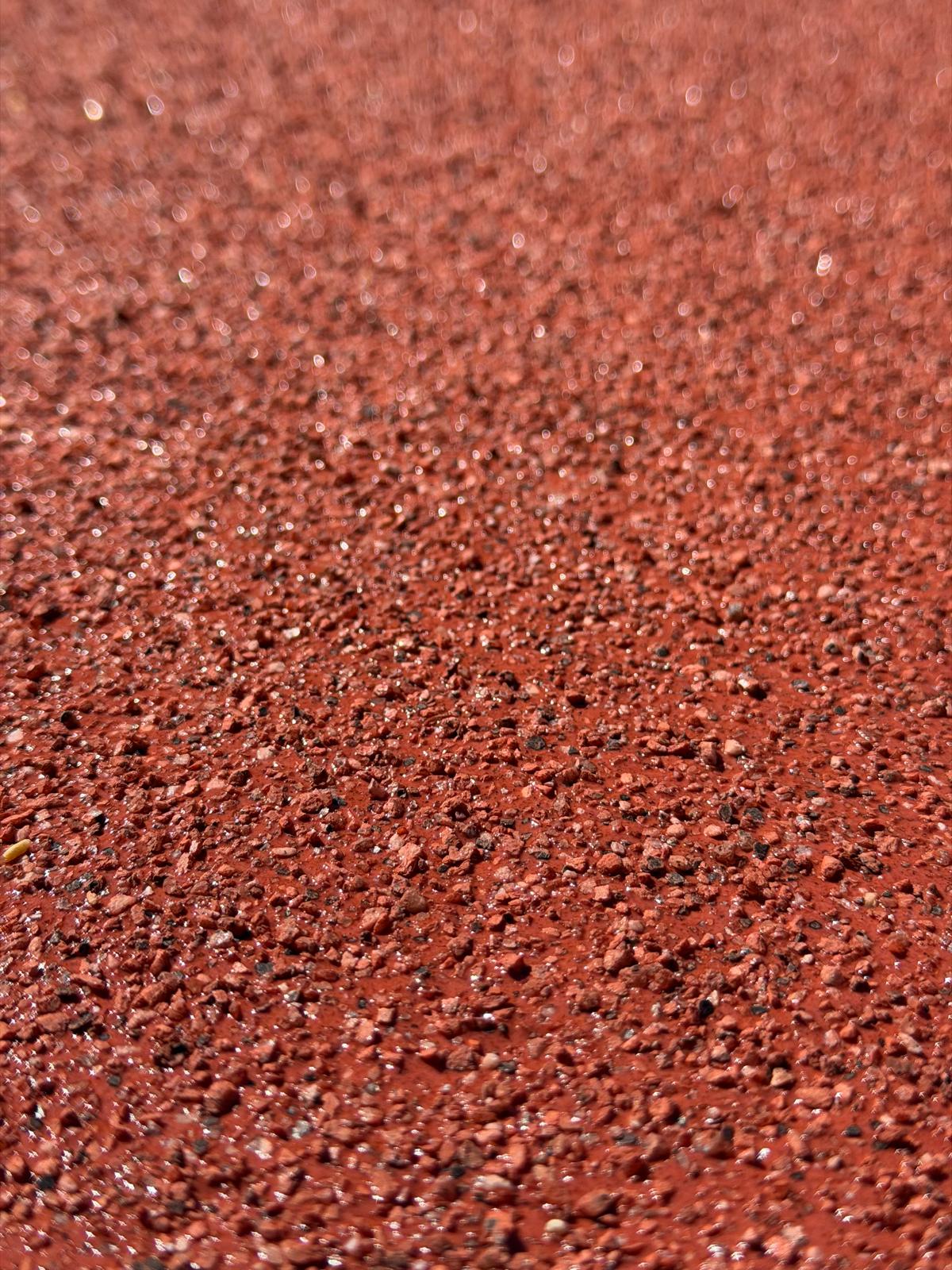
Its application isn't just an aesthetic or signage matter. It's a high-friction pavement designed to improve grip between the tyre and the running surface, especially in areas where the driver needs maximum control of the vehicle, whether on dry or wet asphalt.
Enhanced visibility and risk perception
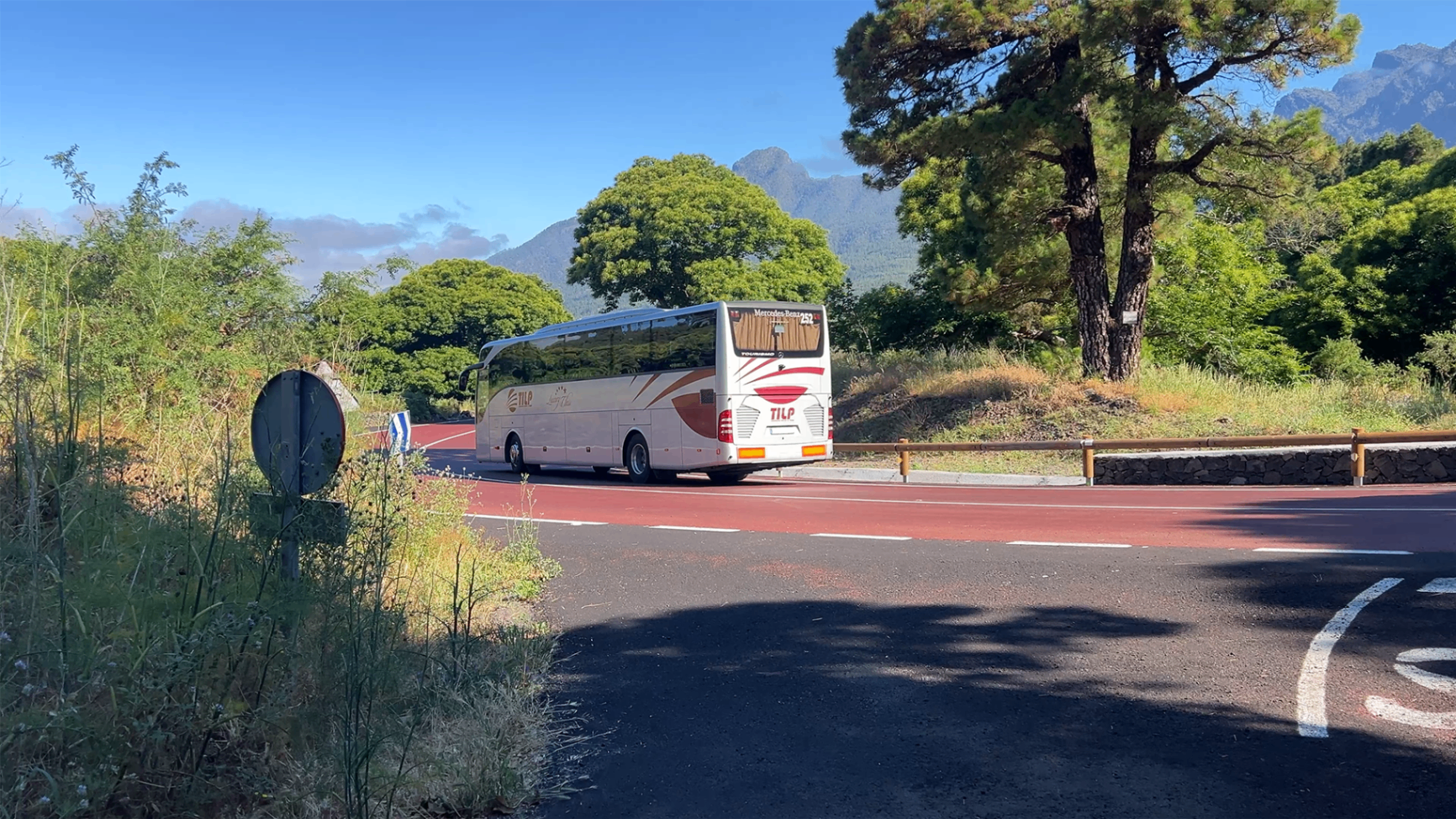
Alongside its anti-skid properties, Zoruflex usually features high-visibility pigmented finishes, with red being one of the most commonly used in road safety works. This visually identifies high-attention zones, providing an additional cue that helps drivers anticipate risk and adapt their driving before reaching the critical point.
A surface that acts, not just warns
The combination of a high-friction surface and strong visual perception turns the pavement into an active element of the road safety strategy. It's not only about warning the driver that a curve or sensitive section is ahead: it's about providing a surface capable of delivering higher grip levels precisely where they are needed most.
Typical road safety applications
- Tight-radius curves and curves with a history of run-offs.
- Approaches to roundabouts and intersections with pedestrian crossings.
- Long descents and sections with frequent braking.
- Level crossings, tunnel entrances and school zones.
- Accident concentration sections (TCA) declared by the authorities.
For all these reasons, Zoruflex Tráfico has established itself as a solution particularly suited to interventions at black spots, risky curves and accident concentration sections, where improving infrastructure behaviour can help increase safety for all road users.
El Paso (La Palma): acting where it matters most
Road safety actions deliver the greatest value when carried out in those places where they can really make a difference.
The recent intervention on a high-attention curve in El Paso, La Palma, is an example of this philosophy.
Through the application of Zoruflex, work has been done on a section where improved grip and surface visibility can help reinforce safety conditions for road users.
It's not just about renewing a road. It's about intervening at strategic points where infrastructure can help reduce risks and increase driver confidence.
Road safety is also built from the pavement up
When we talk about accidents we usually think of vehicles, speed or human behaviour. And, without doubt, all these factors are essential.
But there is a less visible reality:
Road safety also depends on the quality of the infrastructure.
Signage guides. Barriers protect. Regulations rule. But it's the pavement that maintains permanent contact with the vehicle.
That's why acting on black spots, dangerous curves and accident concentration sections remains one of the most effective tools for moving towards safer roads.
Because, sometimes, the difference between losing control and staying on course starts exactly where the wheels touch the ground.
FAQ about black spots, dangerous curves and high-grip pavements
- What is a black spot on a road?
- A black spot is a specific section of the road network where a significantly higher number of accidents concentrate compared to other sections with similar characteristics. Today authorities usually use the technical term Accident Concentration Section (TCA) to identify and prioritise road safety improvement actions.
- Why are curves so dangerous for road safety?
- In a curve, speed, visibility, racing line, tyre condition and grip between vehicle and pavement all come into play at once. When one of these factors fails, the margin for reaction drops drastically and the risk of run-off, crossing into the oncoming lane or loss of control increases.
- What is a high-grip or high-friction pavement?
- It is a pavement designed to increase the friction coefficient between the tyre and the road surface. It's applied over the existing pavement as a specific layer that improves grip, reduces braking distance and helps the driver keep control on curves, roundabouts, intersections and descents.
- Where are anti-skid pavements such as Zoruflex Tráfico used?
- They are mainly used on dangerous curves, approaches to roundabouts, intersections with pedestrian crossings, long descents, school zones, tunnel entrances and, above all, on accident concentration sections (TCA) identified by the authorities.
- Why are many road safety pavements red?
- Red is used to generate a strong visual contrast with conventional asphalt. This helps the driver perceive the section change sooner and anticipate risk, reinforcing the effect of vertical signage. In the case of Zoruflex Tráfico, that pigmented finish is combined with a high-friction surface, so the pavement not only warns: it also improves grip.
- How much can accident risk drop by applying a high-grip pavement on a curve?
- The reduction depends on each section's conditions (curve radius, traffic intensity, rainfall, previous state of the pavement), but various European authorities have documented very significant drops in run-off crashes and rear-end intersection crashes after applying high-friction treatments. That's why they are a regular part of road safety plans for black spots.
- Who applies Zoruflex Tráfico in the Canary Islands?
- Zoruflex is a solution developed and installed by Byond Canarias. We work with authorities, town councils, island councils and concession companies on high-grip pavement, road safety and accident-section improvement projects across the entire archipelago.
Discover Zoruflex Tráfico, our high-friction pavement solution for curves, roundabouts and accident concentration sections.
See Zoruflex Tráfico →