Skip to content

    Sustainability and
    materiality in Zoruflex.

    We treat sustainability as part of the technical system, not as an absolute promise. Each material decision — recycled glass, selected aggregates, reuse of the existing substrate — is applied where it brings real technical value, within Byond Canarias' circular-economy logic.

    01RECYCLED GLASS

    Recycled glass across the Zoruflex family

    Selected Zoruflex systems integrate micronised recycled glass as part of the aggregate or finishing layer. This is especially relevant in Zoruflex Byo Eco Estabilizador, where recycled glass acts as the system's main aggregate. Integration occurs whenever the system and application allow it, without compromising the pavement's technical behaviour.
    02CIRCULAR ECONOMY

    Circular-economy logic

    Byond Canarias' approach starts by reusing existing materials — local aggregates, on-site soils, treated glass waste — to reduce the inflow of new materials. The circular logic is applied where it makes real technical sense, not as a promotional argument.

    03TECHNICAL MATERIALITY

    Technical materiality: MMA, aggregates and recycled glass

    Zoruflex's material base combines high-performance MMA binders with aggregates selected for hardness, calibre and origin. Recycled glass is integrated where the system allows, replacing part of the conventional aggregate without reducing mechanical behaviour.

    04REUSE

    Reuse of on-site resources

    In solutions like Zoruflex Estabilizado, the system uses the aggregate or soil already on site, treating and stabilising it instead of removing material and bringing in new. This logic reduces transport, waste and external raw-material consumption.

    05MATERIAL INNOVATION

    Material-innovation approach

    Byond Canarias develops formulas and material combinations aimed at improving pavement technical behaviour while reducing the system's material footprint. Innovation is applied product by product, validating each change before site use.

    06BYOND CANARIAS

    Developed from Byond Canarias

    The whole Zoruflex family is developed from the Canarias, with criteria adapted to the insular environment: climate, salinity, site conditions, material availability and local technical demands. Sustainability is understood as part of a technical system, not as an added label.

    GLASS · 06

    FROM WASTE TO TECHNICAL AGGREGATE

    Recycled glass, treated as an engineering material.

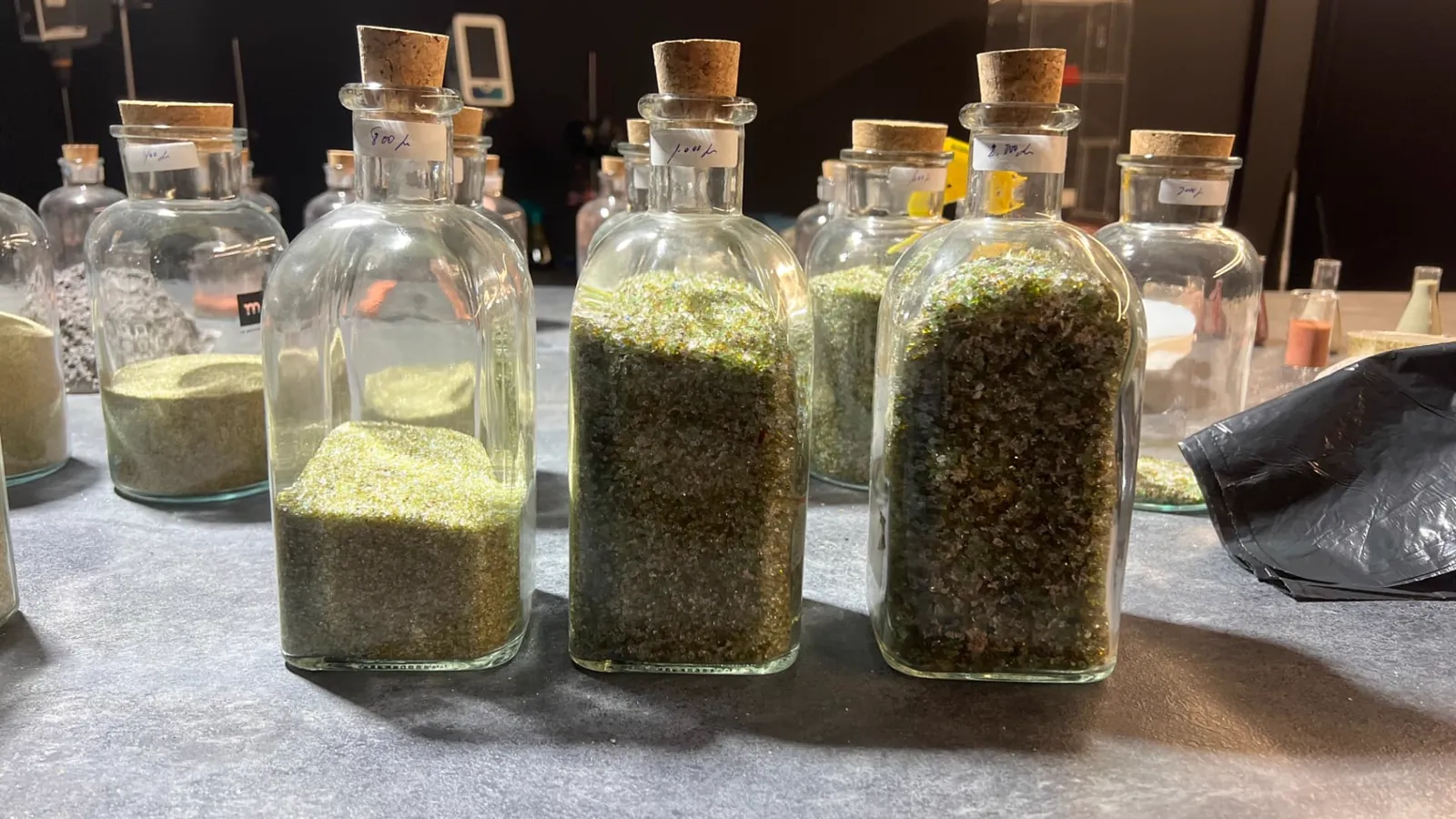
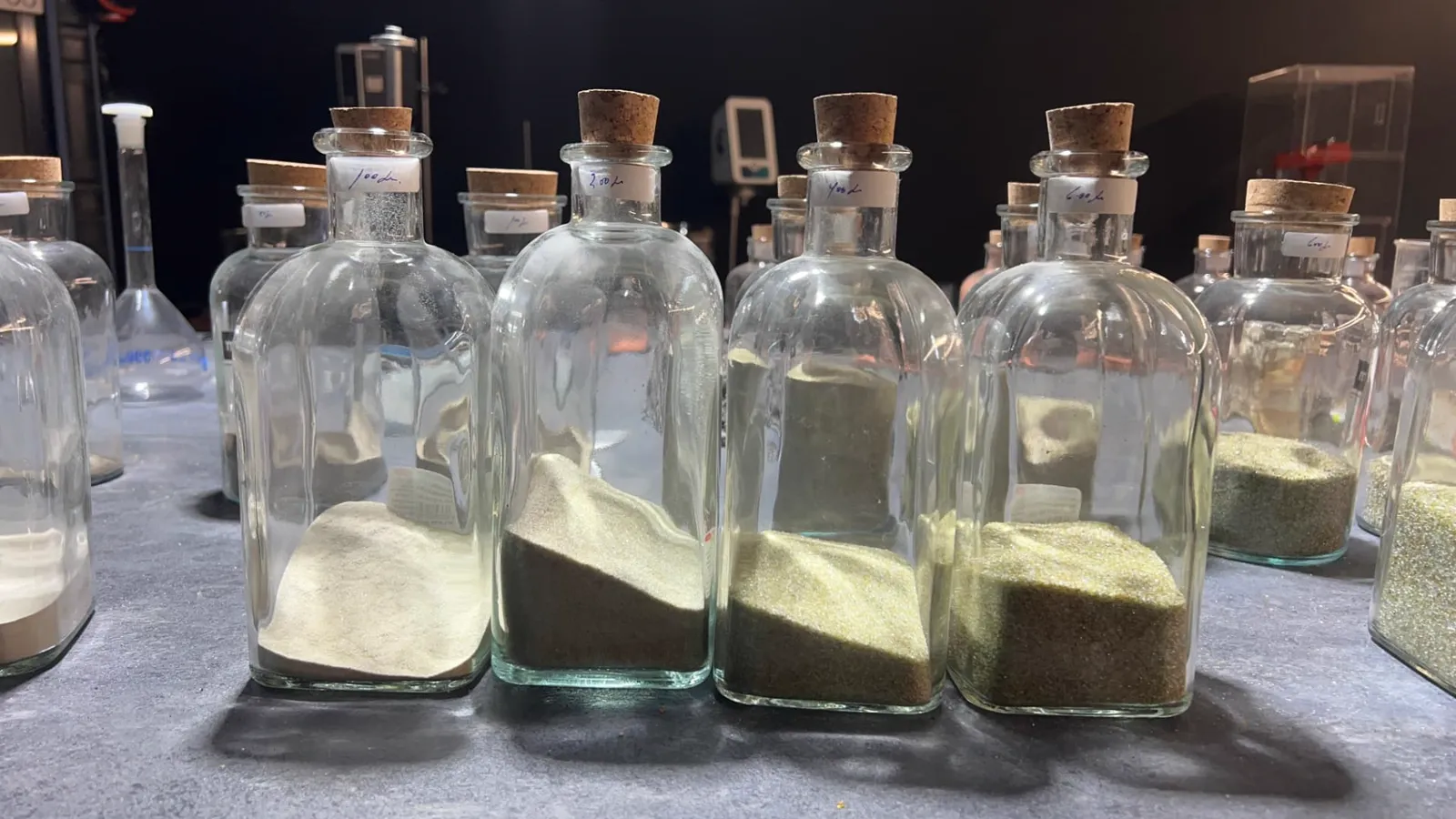
    Recovered glass does not go straight into the pavement: it is cleaned, crushed, graded by particle size and characterised in the laboratory before becoming a system aggregate. Each fraction has a different role within the Zoruflex family.

    1. 01

      Intake and crushing

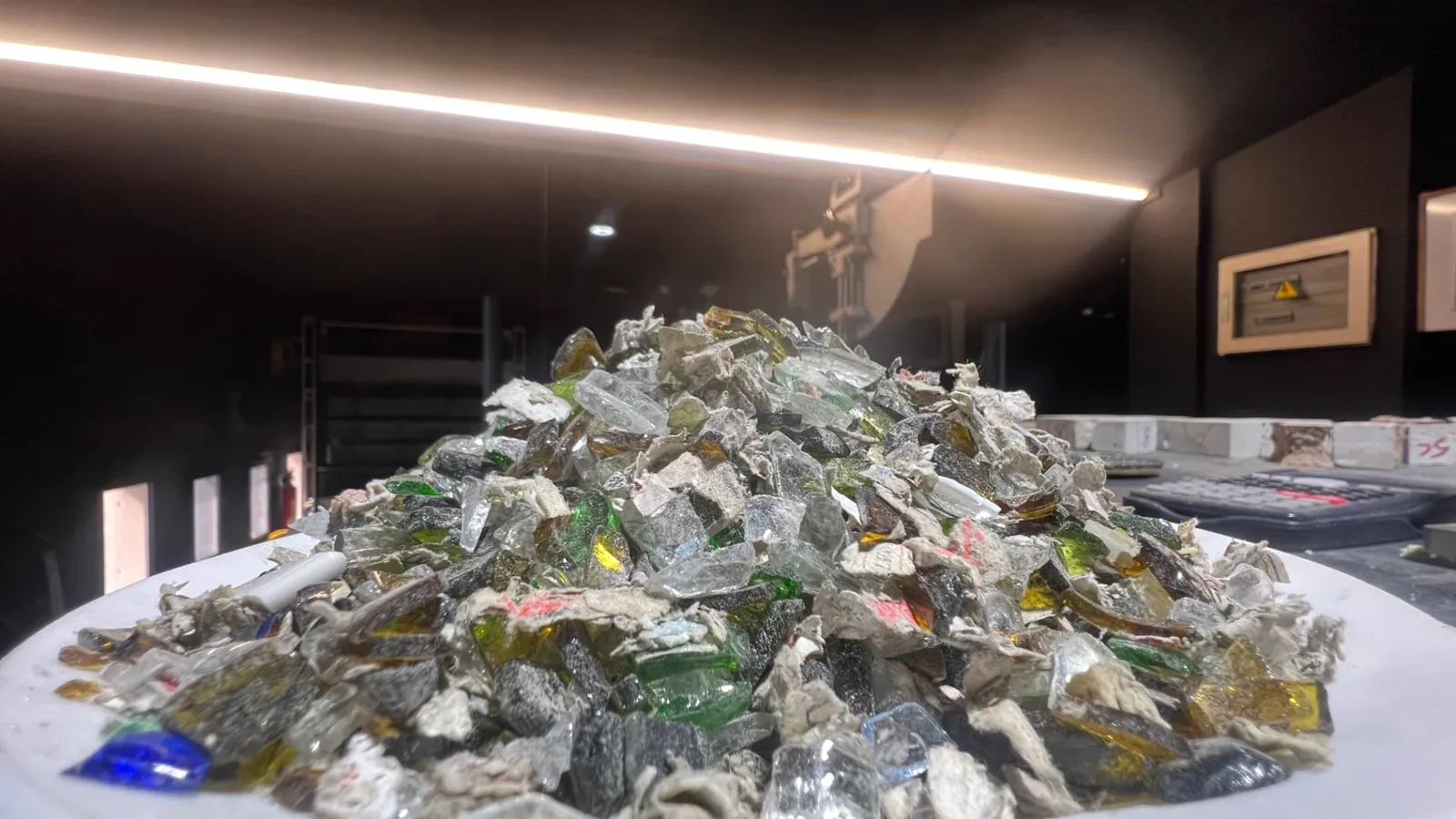
      Mixed-colour glass cullet, recovered from waste and crushed into a coarse fraction.

    2. 02

      Washing and sorting

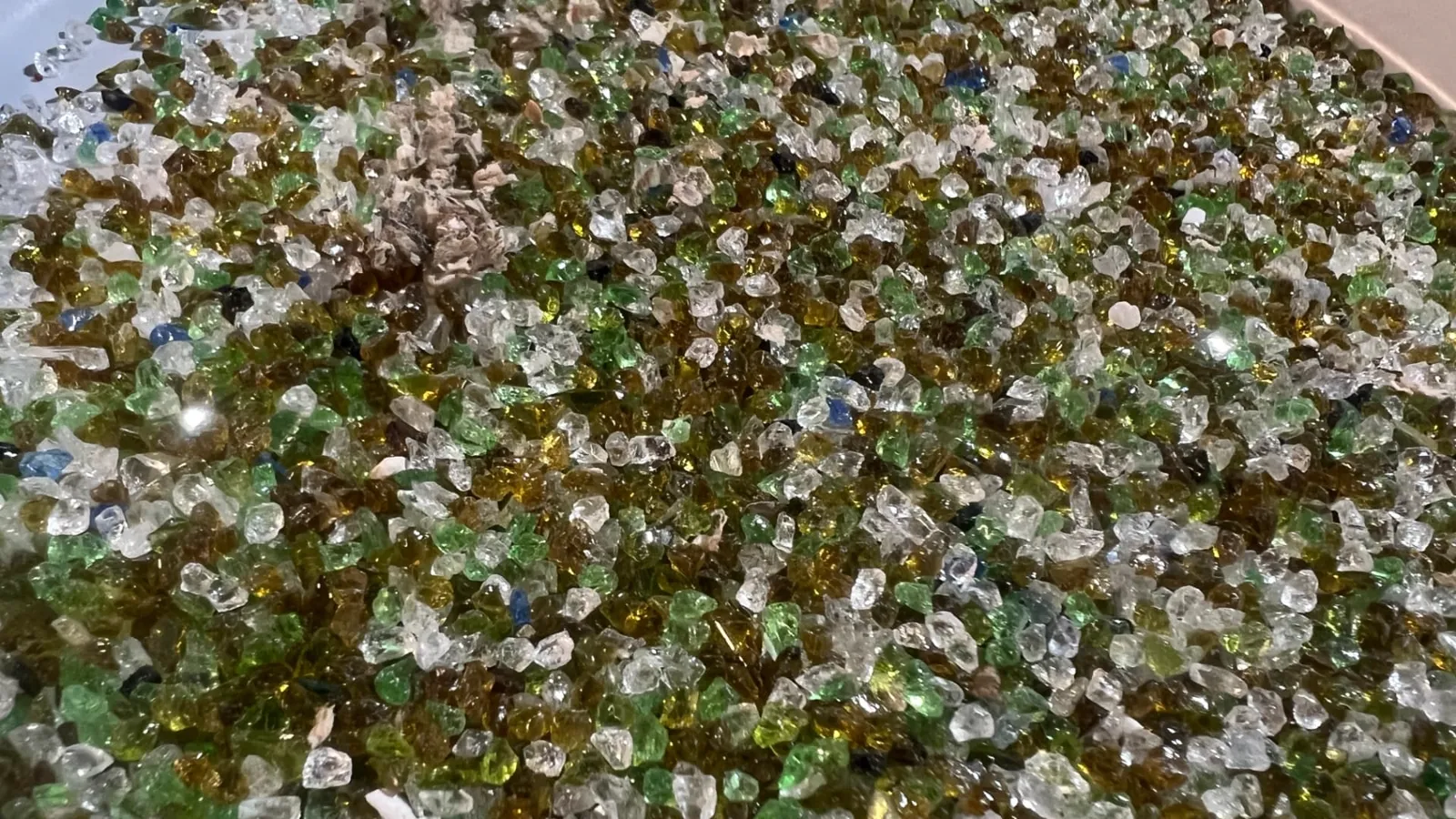
      Labels and fines are removed and the material is separated into clean fractions ready for grading.

    3. 03

      Controlled grading

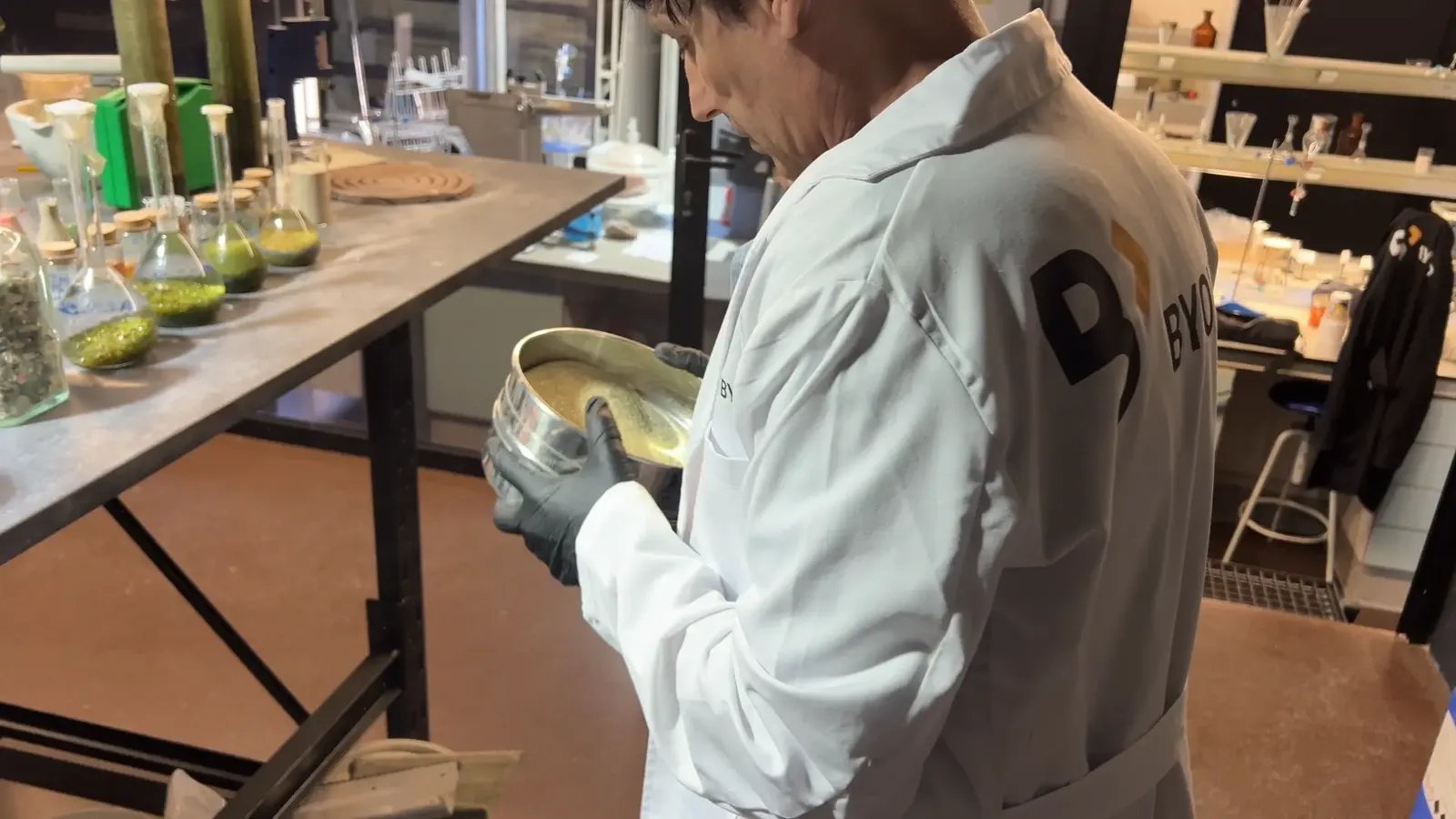
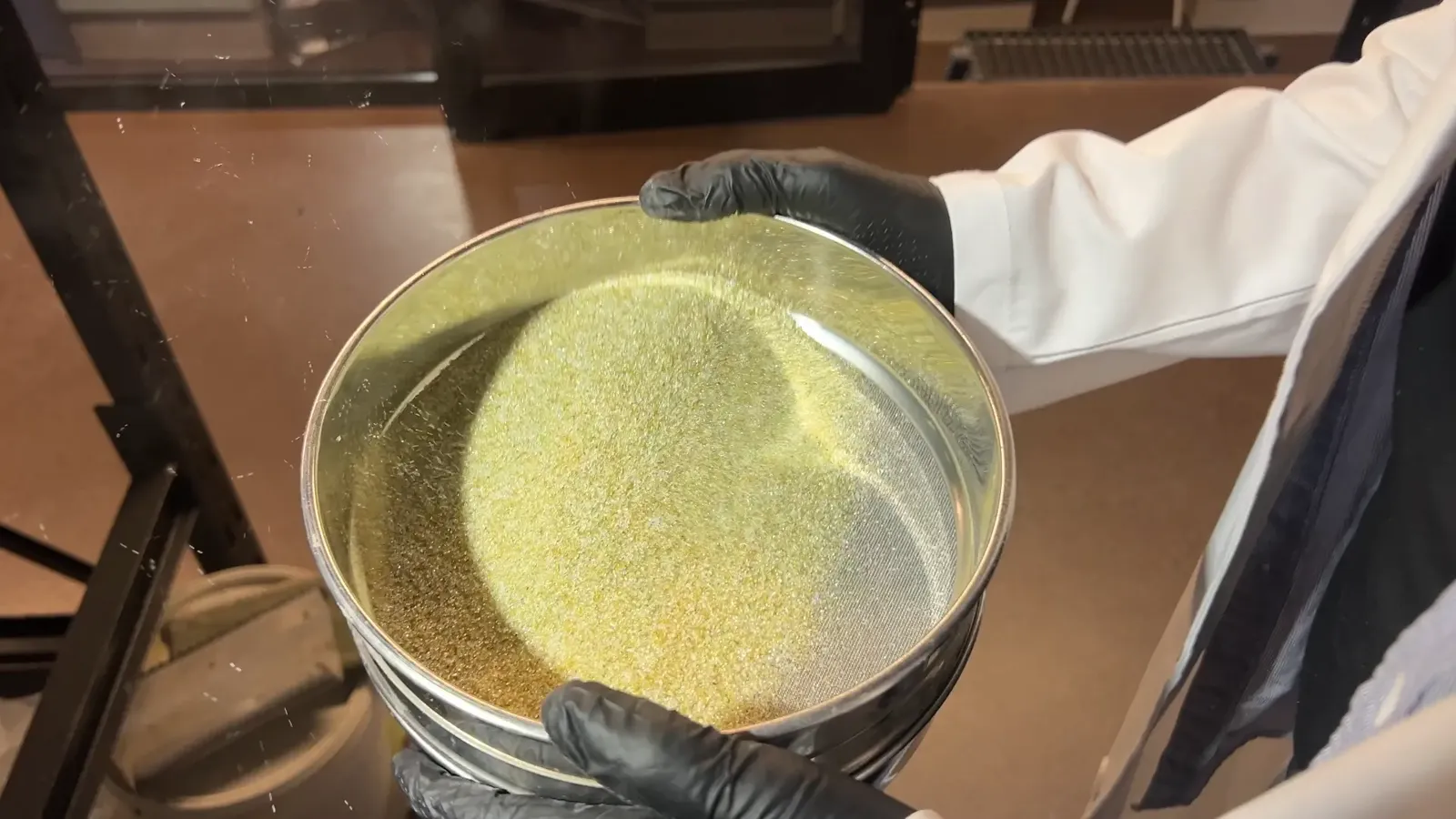
      Sieving into calibrated series: from coarse sand down to micronised mineral filler.

    4. 04

      Laboratory characterisation

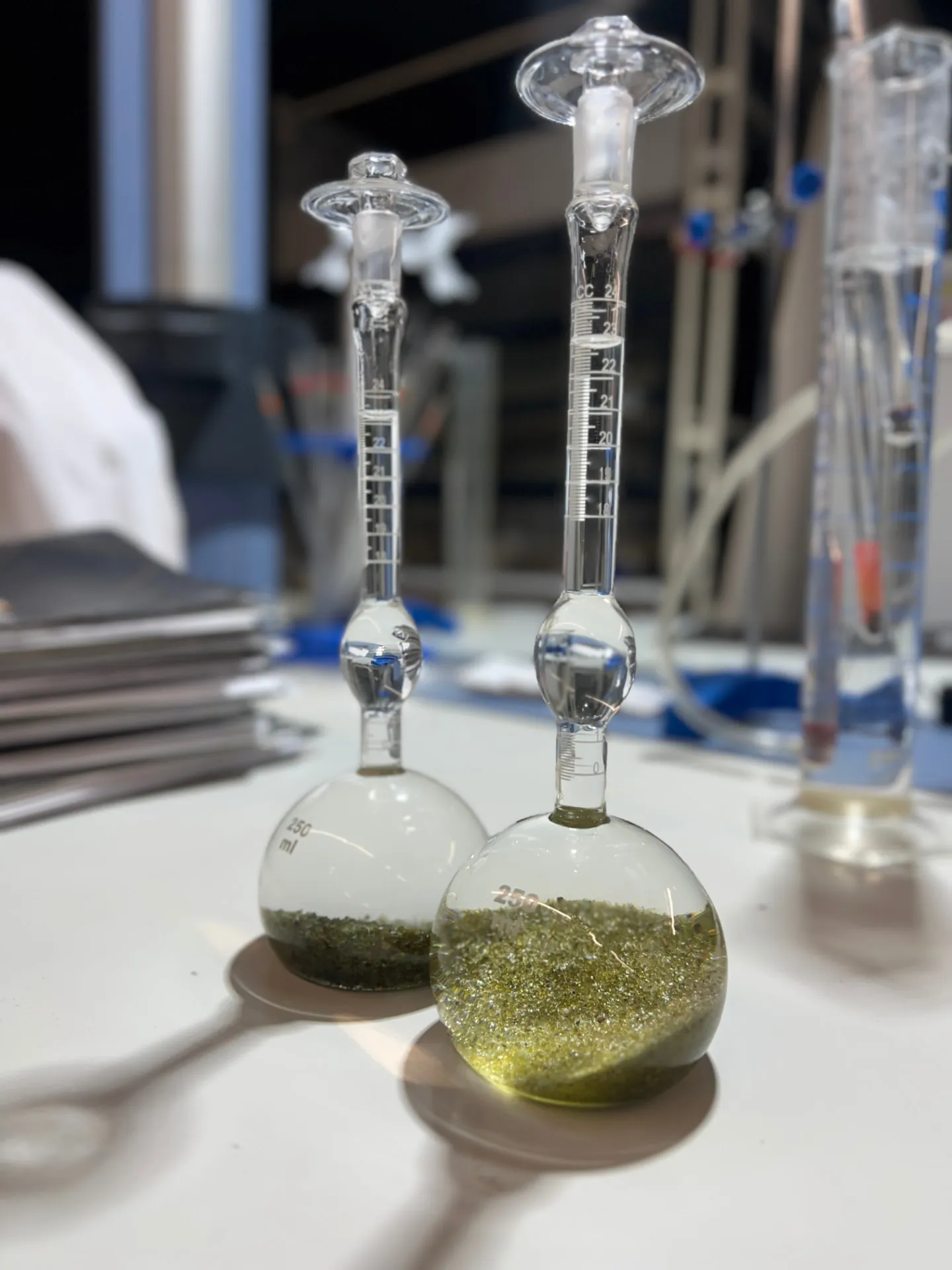
      Density, absorption, particle shape and mix behaviour are checked before entering a formula.

    Crushed recycled glass cullet in the Byond Canarias laboratory before washing
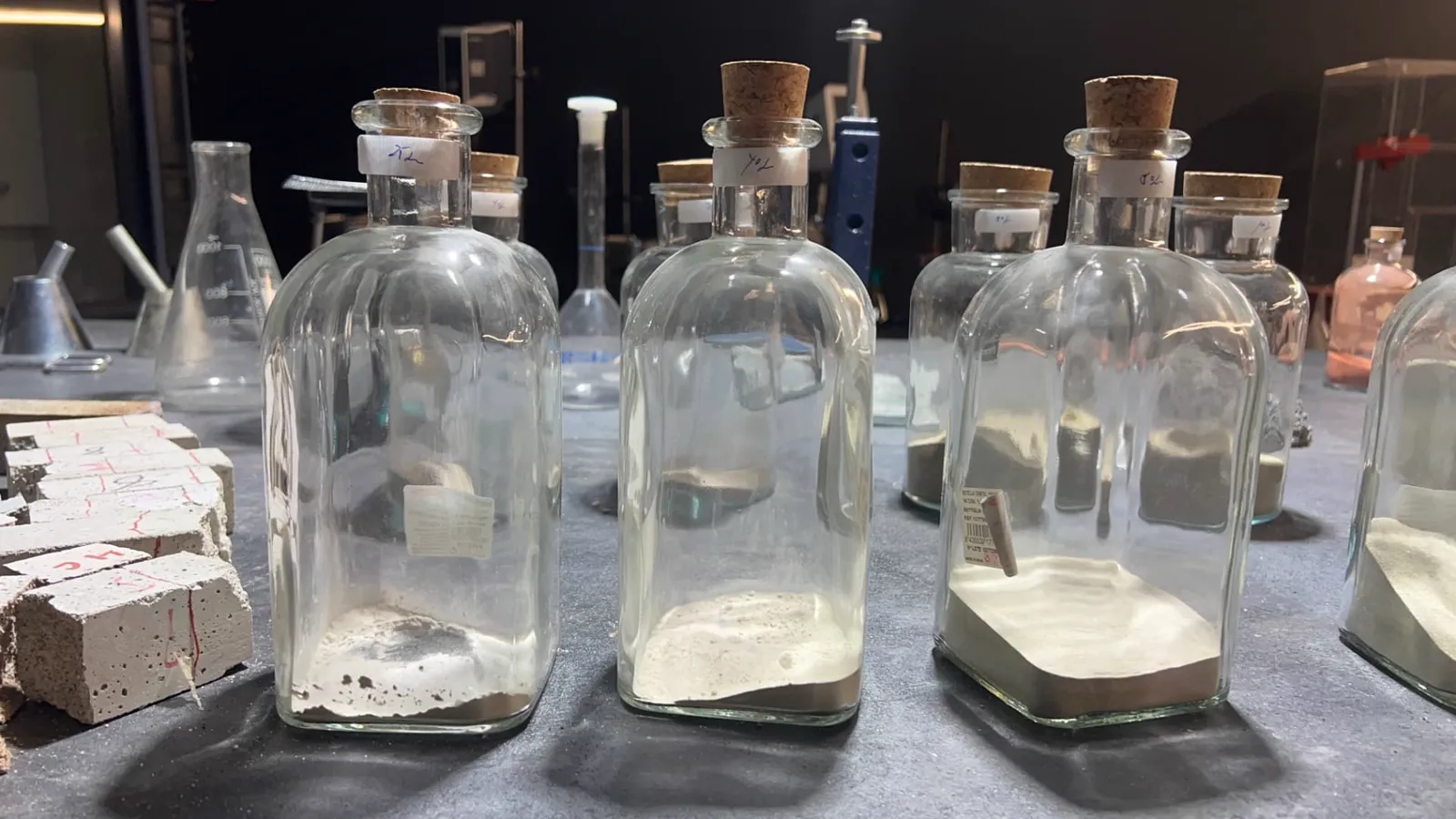
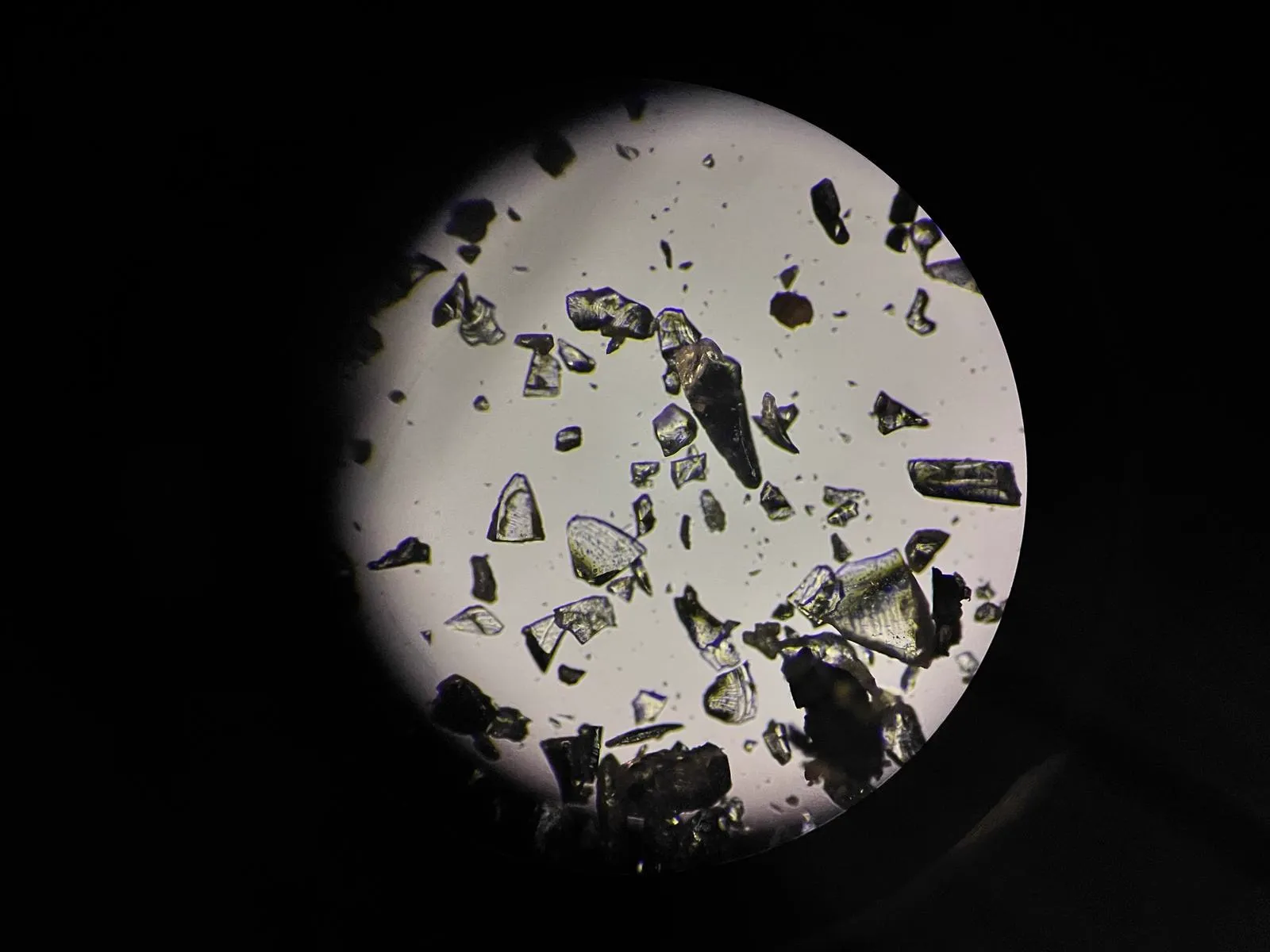
    Clean crushed recycled glass ready to be graded by particle sizeSample bottles with coarse recycled glass fractions graded in micronsFine recycled glass fractions in labelled laboratory sample bottlesMicronised glass powder used as mineral filler in Zoruflex formulationsVolumetric flasks with recycled glass in a density and absorption testRecycled glass particles under the microscope to analyse shape and edges
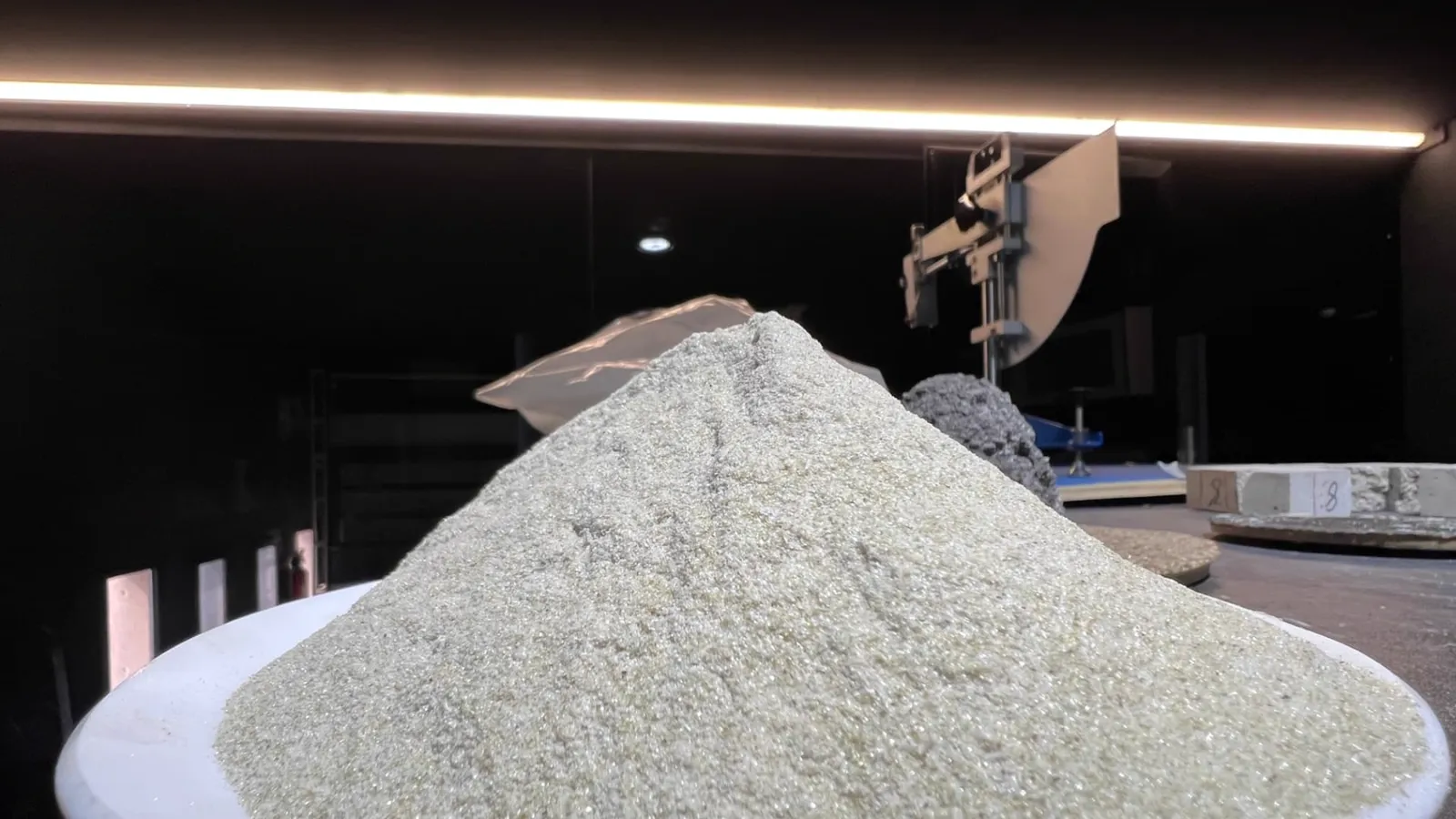
    Byond Canarias technician sieving recycled glass aggregate in the laboratoryLaboratory sieve holding calibrated fine recycled glass aggregateFine siliceous aggregate obtained from the recycled glass treatment process
    COLOUR · 07

    INDUSTRIAL CAPACITY

    Coloured recycled glass.

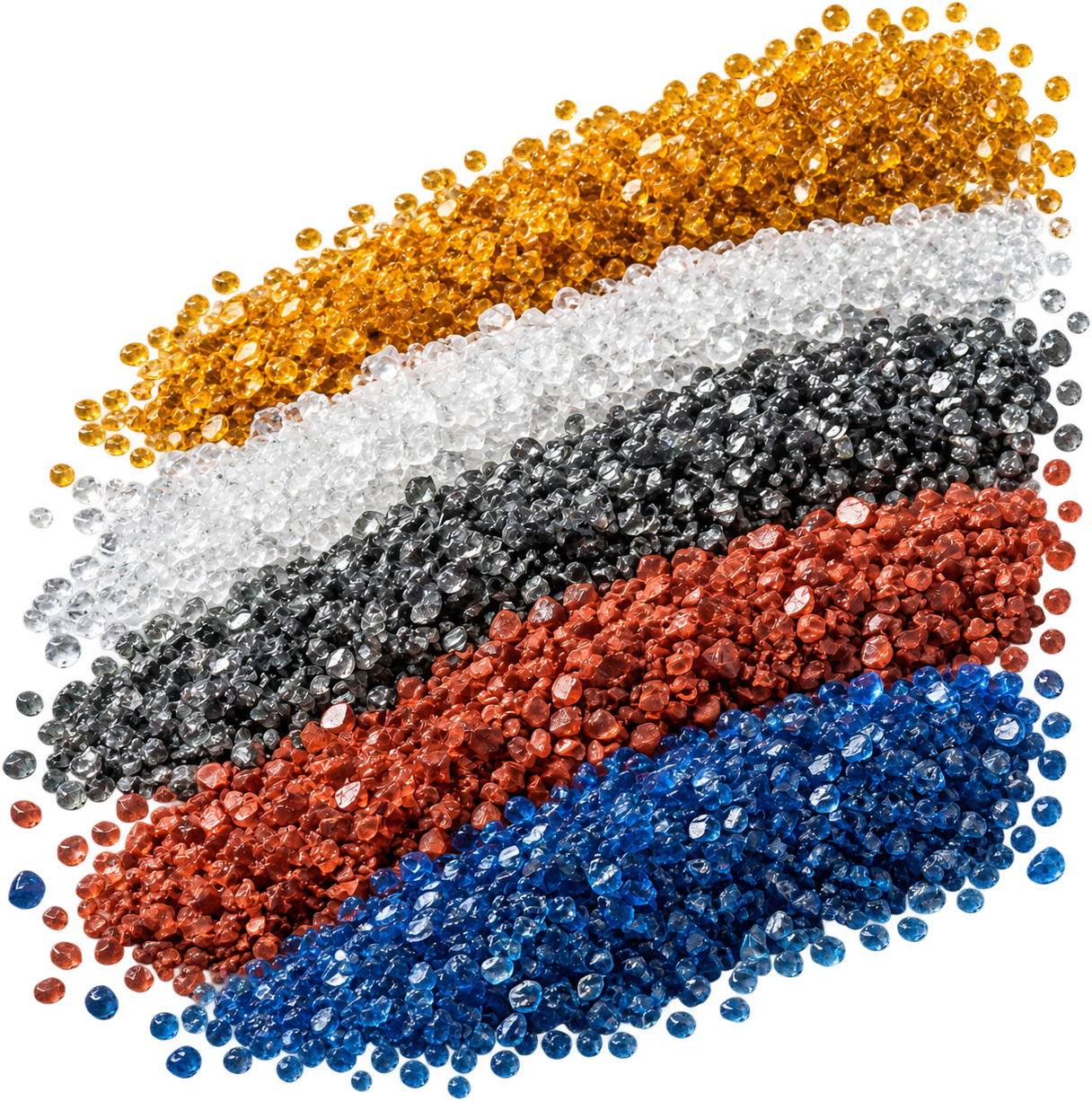
    BYOND has the capacity to select, colour and condition recycled glass, turning it into a functional, configurable aggregate for new surfaces. In the systems we develop, coloured glass fully replaces the natural aggregate fraction.

    Colouring preserves the aesthetic and chromatic versatility of coloured aggregates while recovering glass and reintroducing it as a material of value.

    16
    base colours
    30
    chromatic blends
    4
    glass gradings

    4 GLASS GRADINGS

    • 0.4–0.7 mm
    • 0.4–1.5 mm
    • 0.4–2.3 mm
    • 0.7–2.4 mm
    Byond coloured recycled glass aggregates in amber, white, black, terracotta and blue

    Finishes and applications

    Its versatility allows smooth, textured, monochrome or combined finishes.

    • Seamless flooring
    • Road marking
    • Wall claddings
    • Terrazzo
    • Precast elements
    • Decorative surfaces
    • · Full replacement of natural aggregate
    • · Recovered glass
    • · Greater chromatic freedom
    CIRCULAR · 08

    CIRCULAR ECONOMY · MATERIALS ENGINEERING

    From recovered glass to a new surface.

    Research and new applications

    The ability to control parameters such as particle size, porosity, roughness, permeability, mechanical behaviour, chemical stability and surface interaction opens up new lines of research. These include mineral-based materials, cementitious or geopolymeric matrices, filter media, supports for biological processes, environmental restoration, green and blue infrastructures and other environmental engineering solutions. Each application must be developed through material characterisation and the corresponding technical tests.

    Aligned with the European circular transition

    The Waste Framework Directive and the Circular Economy Action Plan promote prevention, recycling, waste valorisation and the use of secondary raw materials. The model developed around Zoruflex follows this direction: recover glass, transform it technically and reintroduce it as a functional raw material in new surfaces. The transition to a circular economy is also part of the environmental objectives recognised by the EU Taxonomy.

    European reference framework

    • ·Directive 2008/98/EC on waste, as currently in force.
    • ·Circular Economy Action Plan - COM(2020) 98 final.
    • ·Regulation (EU) 2020/852 - EU Taxonomy.
    CRITERION · 07

    How we talk about sustainability.

    We avoid absolute formulations. We work with figures from the applied system and the specific project.

    • We do not say "100% sustainable".
    • We do not promise "zero environmental impact".
    • We do not claim the system "removes CO₂".
    • We do explain which materials are integrated and why.
    Material & system

    Want to work Zoruflex with material criteria in mind?

    Tell us the project, the context and your material objectives. We will assess which configuration best integrates recycled glass or other resources for the application.

    → Action

    Talk to the team

    Start