
Skip to content
    Directional tactile paving installed in an urban outdoor setting
    Accessibility · UNE / CTE DB-SUA reference

    Tactile paving for accessible outdoor routes.

    Studded and directional tactile tiles manufactured by Byond Canarias within the Zoruflex Preformed system. Anti-slip, multi-substrate and designed to mark crossings, platforms, accesses and level changes using Spanish accessibility regulations as reference. Final compliance is verified project by project.

    What it is · 01

    A tile you read with your foot and your cane.

    Tactile paving is a system of tiles with standardised reliefs that blind or low-vision people can identify instantly. It provides tactile information about changes, hazards and routes without needing vision.

    In Spain its installation is regulated by CTE DB-SUA and Order TMA/851/2021 (basic accessibility and non-discrimination conditions in urbanised public spaces).

    Zoruflex manufactures the two standard families: studded (warning) and directional (guidance), taking as reference the geometry, colour contrast and anti-slip performance described in those standards.

    Types · 02

    Two tiles, one clear reading.

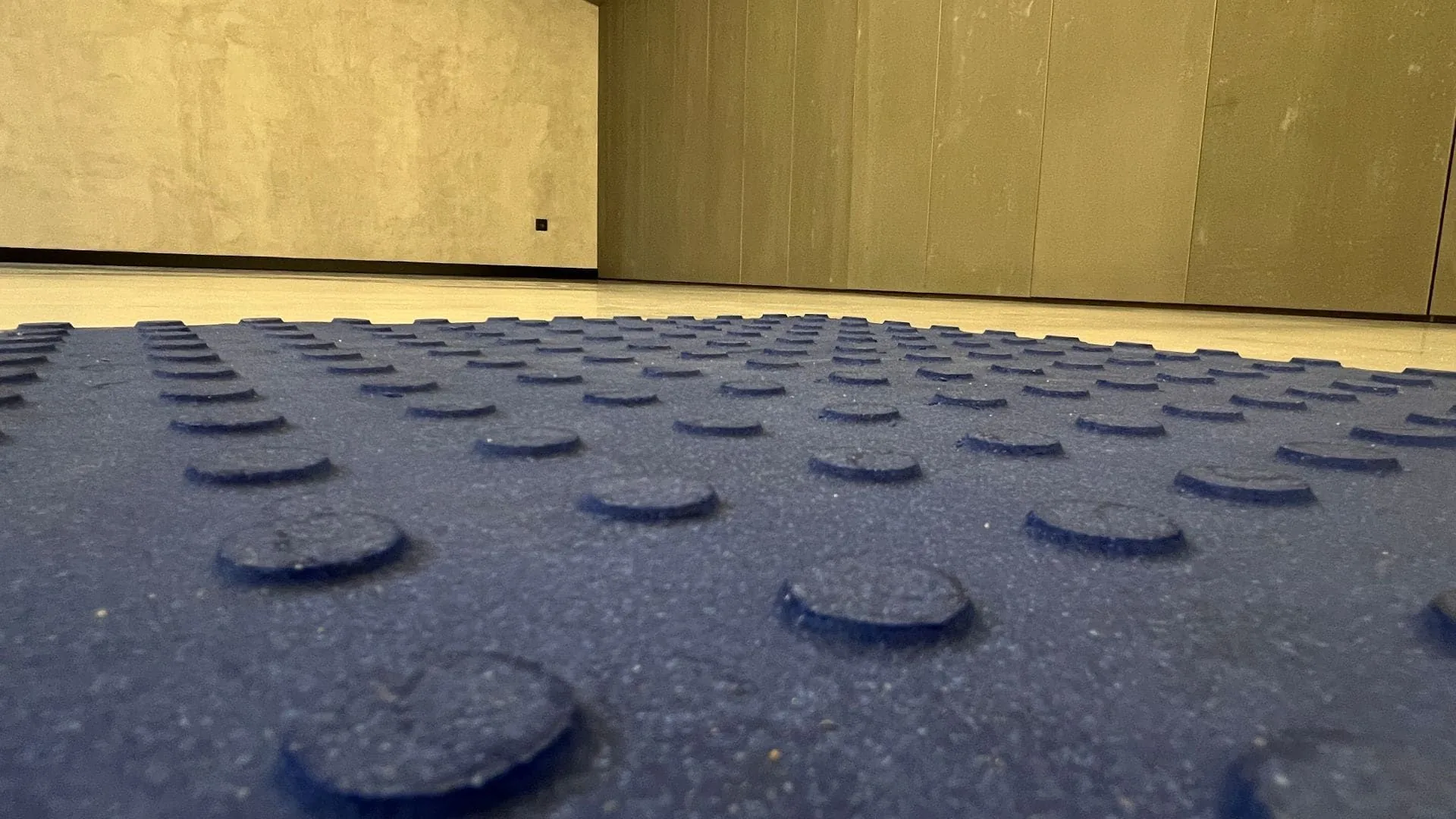
    Studded tactile tile for warning signalling

    Studded tile

    Warning function. Placed at crossings, platform edges, stair heads and risk areas. Truncated-cone studs with standardised height and spacing.
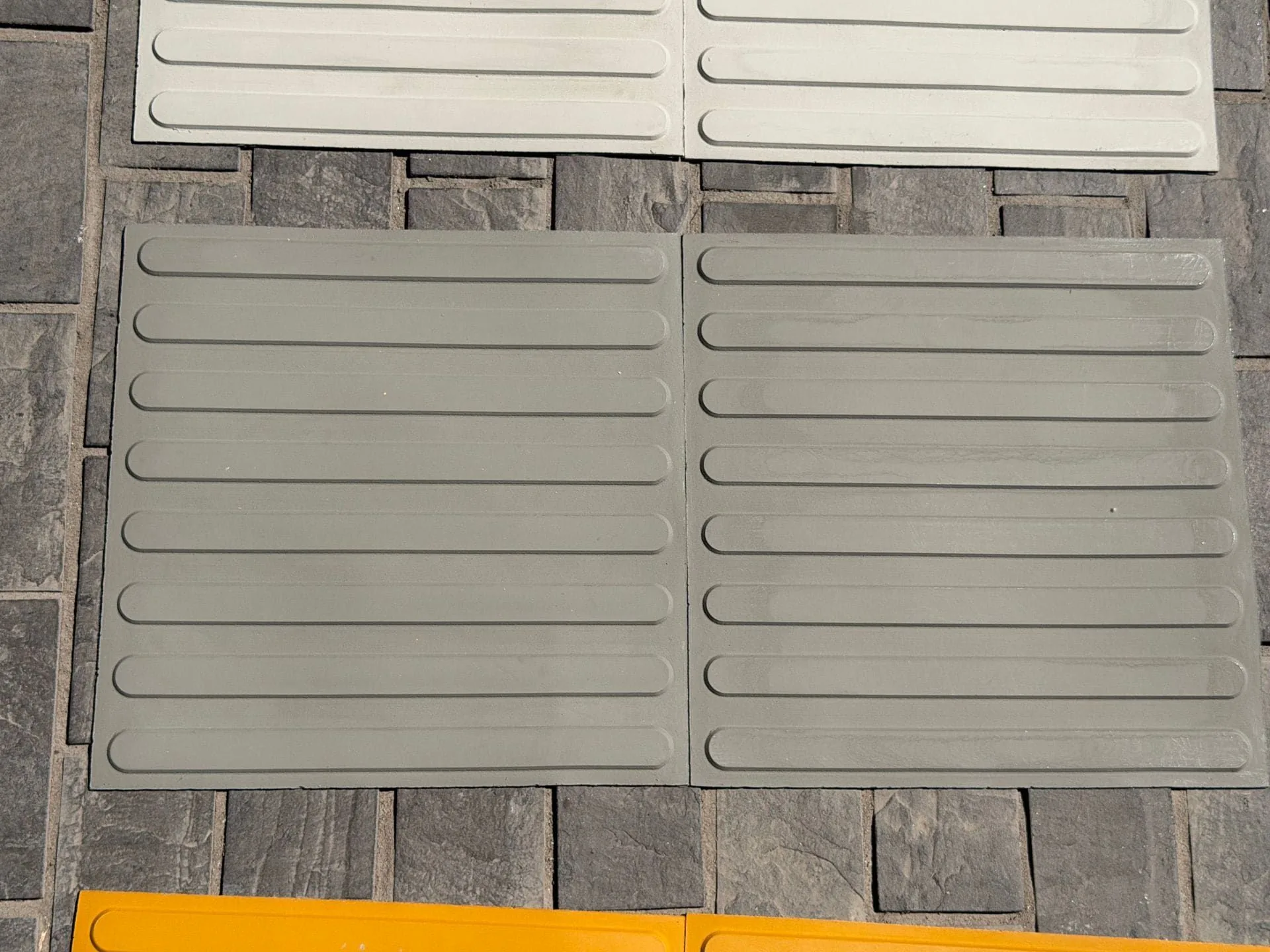
    Directional tactile tile with bars for tactile guidance

    Directional tile

    Guidance function. Longitudinal bars indicating the route to follow between two points (access, crossing, transport stop). Combines with studded tiles at crossings and turns.
    Applications · 03

    Where Zoruflex tactile paving is installed.

    • Pedestrian crossings and urban intersections
    • Bus, tram and metro platforms
    • Public building entrances
    • Intermodal stations and car parks
    • Stair and ramp entries
    • Accessible routes in squares and parks
    • Educational and health centres
    • Hotels and tourist environments
    • Airports and port terminals
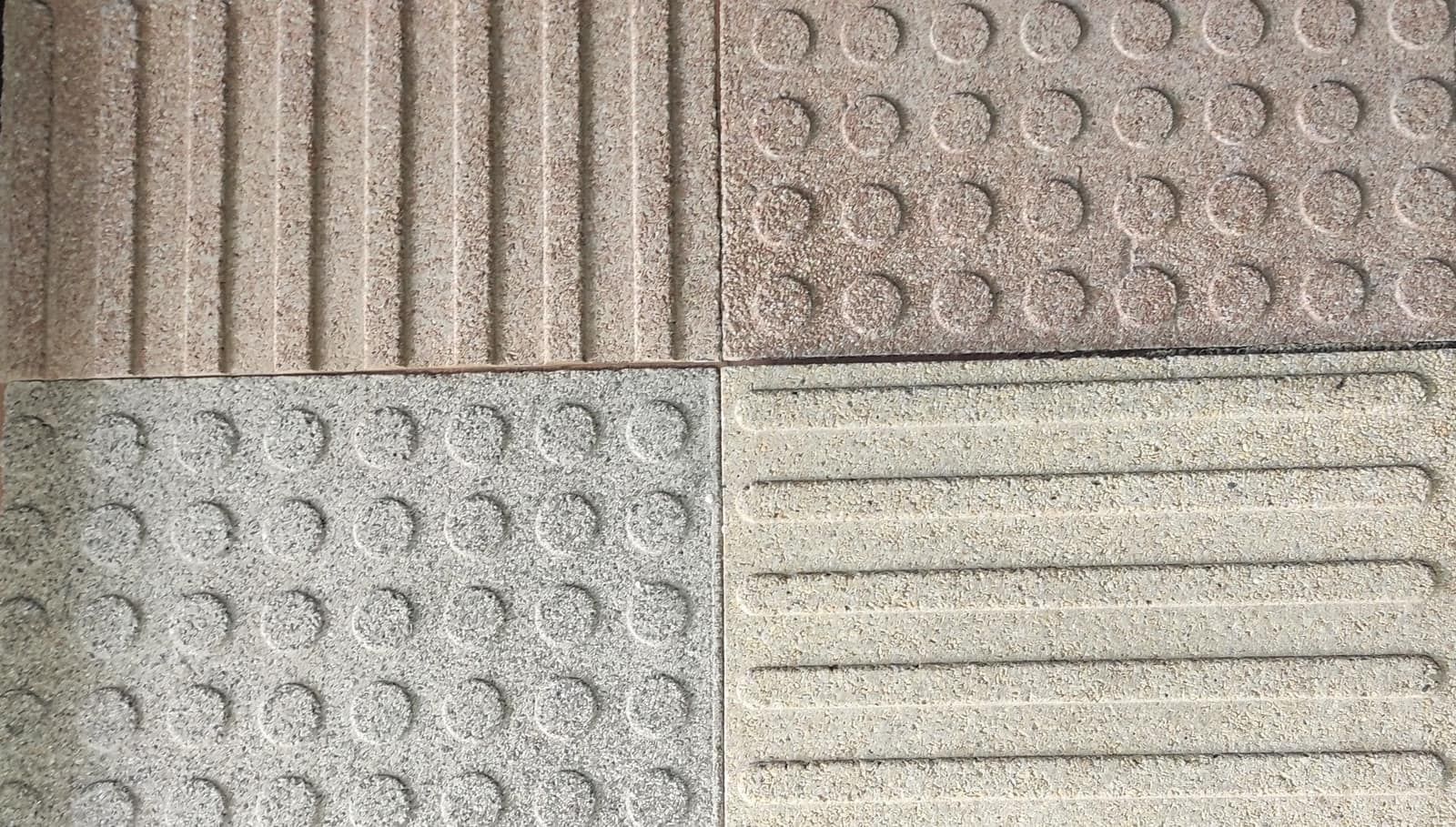
    Mosaic of Zoruflex tactile tiles in various colours and reliefs
    Zoruflex tactile tiles · available colour range and reliefs.
    Questions · 04

    Frequent questions about tactile paving.

    What is tactile paving?
    It is paving with tactile reliefs —studs or directional bars— that people with visual impairments can detect with a cane or foot. It marks crossings, platforms, stairs and level changes along accessible routes.
    What types of tactile tiles exist?
    There are two standardised families: the studded tile (warning, at crossings and platform edges) and the directional tile with bars (guidance along a route). Zoruflex manufactures both in different formats, thicknesses and colours.
    Which substrates can it be installed on?
    On asphalt, concrete, cobblestone, hydraulic tile and mixed substrates. Each substrate requires a specific installation profile (primer, glass fibre or technical adhesive), defined to obtain the required adhesion and durability and verified according to the project and site conditions.
    Does it comply with Spanish accessibility regulations?
    Zoruflex Preformed tactile pieces are designed and manufactured taking as reference the geometric and chromatic characteristics set out in CTE DB-SUA, Order TMA/851/2021 and UNE urban accessibility standards. Final compliance is verified project by project, according to its design and site conditions.
    How long does installation take?
    It depends on the scope, the substrate and site conditions. For localised interventions such as a pedestrian crossing, planning usually aims to keep disruption to pedestrian and vehicle traffic to a minimum. Timescales are defined project by project.
    Let's talk about the project

    Need to mark an accessible route?

    We design the tactile solution for your project: measurement, custom manufacturing and installation with minimal impact.

    → Action

    Request a quote

    Start