
Skip to content
    Directional tactile paving installed in an urban exterior environment
    Accessibility · EN 17210 / CTE DB-SUA

    Tactile paving for accessible public space.

    Blister and directional tactile tiles manufactured by Byond Canarias as part of the Zoruflex Preformed range. Slip-resistant, multi-substrate and engineered to signal crossings, platform edges and accessible routes, taking European and Spanish accessibility standards as reference. Final compliance is verified project by project.

    What it is · 01

    A surface that can be read by foot and cane.

    Tactile paving uses standardised raised profiles that visually impaired pedestrians can detect at first contact. It conveys information about hazards, transitions and direction of travel without requiring sight.

    Zoruflex manufactures both reference families: blister tiles (warning) and directional tiles (guidance), with the geometry, colour contrast and slip resistance required by accessibility regulations.

    Tiles are bonded over the existing substrate with technical adhesives, following an installation profile defined for each substrate. Timescales and disruption are assessed project by project.

    Types · 02

    Two tiles, one clear language.

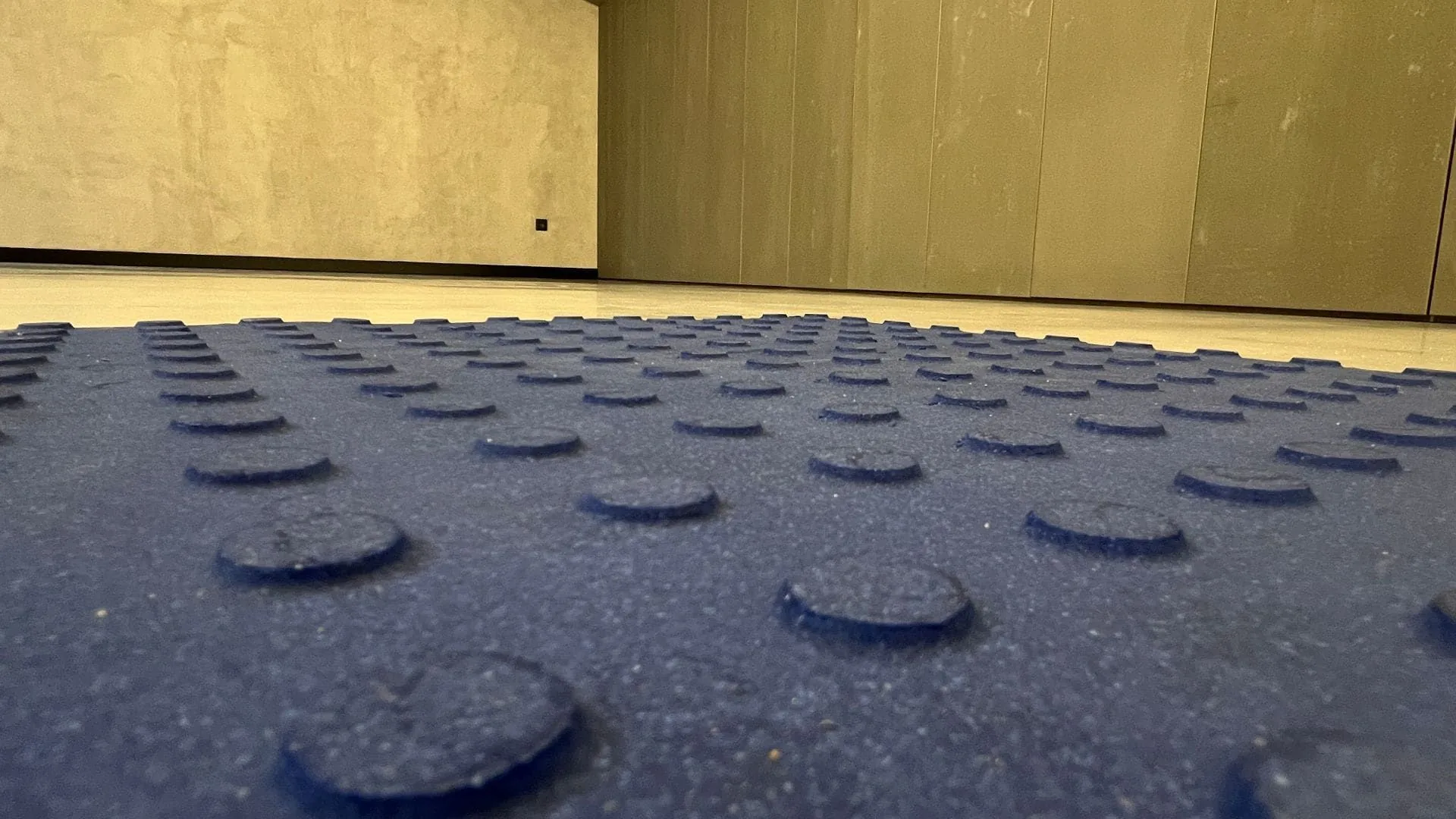
    Blister tactile paving tile signalling a warning point

    Blister (warning) tile

    Raised dots that signal attention or hazard. Installed at pedestrian crossings, platform edges, stair landings and risk areas. Standardised dot height and spacing.
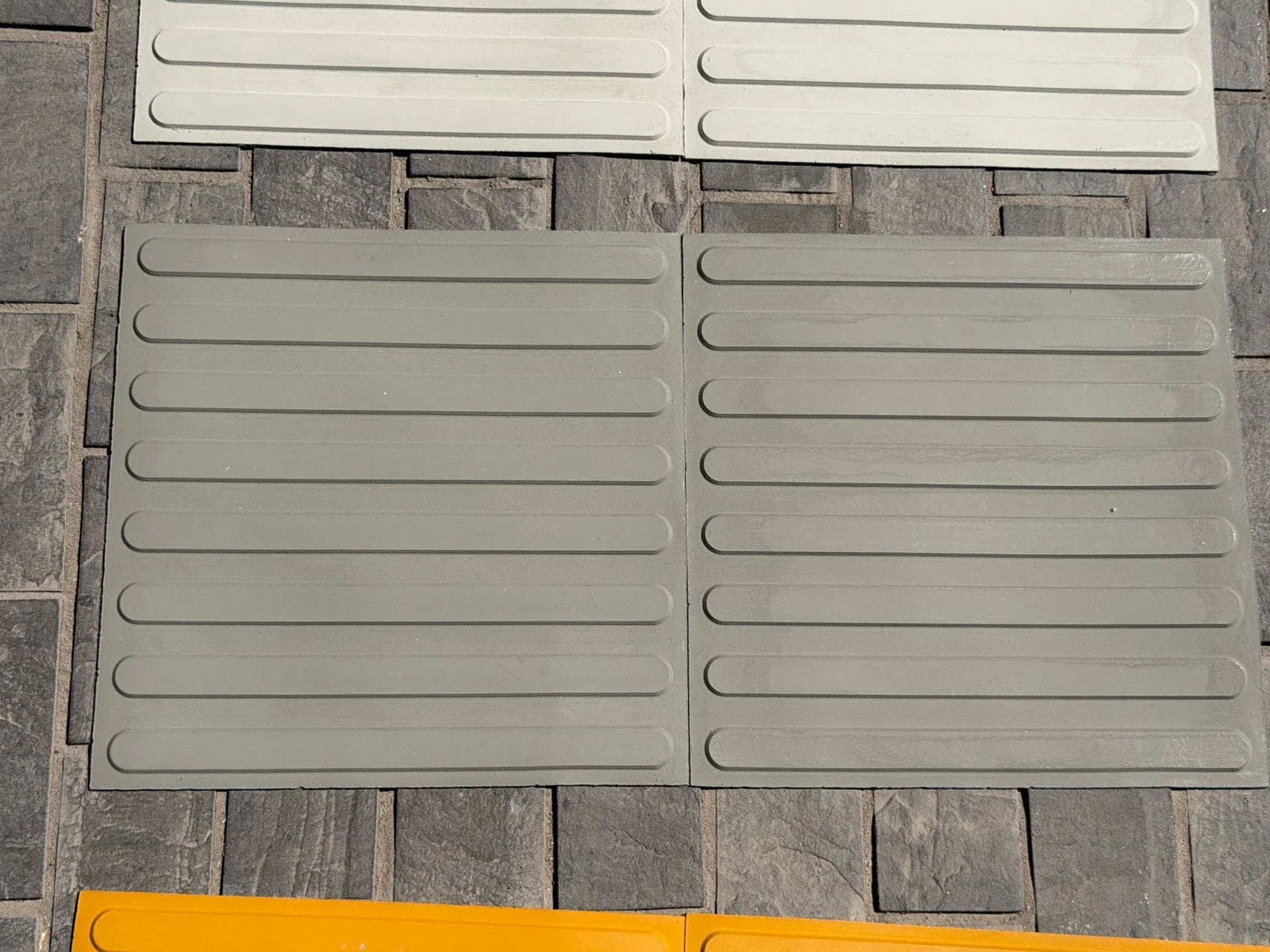
    Directional tactile paving with guidance bars

    Directional (guidance) tile

    Parallel raised bars that indicate the direction of travel along an accessible route between two reference points (entrance, crossing, transport platform). Can be combined with blister tiles at decision points.
    Use cases · 03

    Where tactile paving belongs.

    • Pedestrian crossings and urban junctions
    • Bus, tram, train and metro platforms
    • Public building entrances
    • Intermodal stations and car parks
    • Stair and ramp landings
    • Accessible routes in plazas and parks
    • Schools, hospitals and care facilities
    • Hotels and tourism environments
    • Airports and port terminals
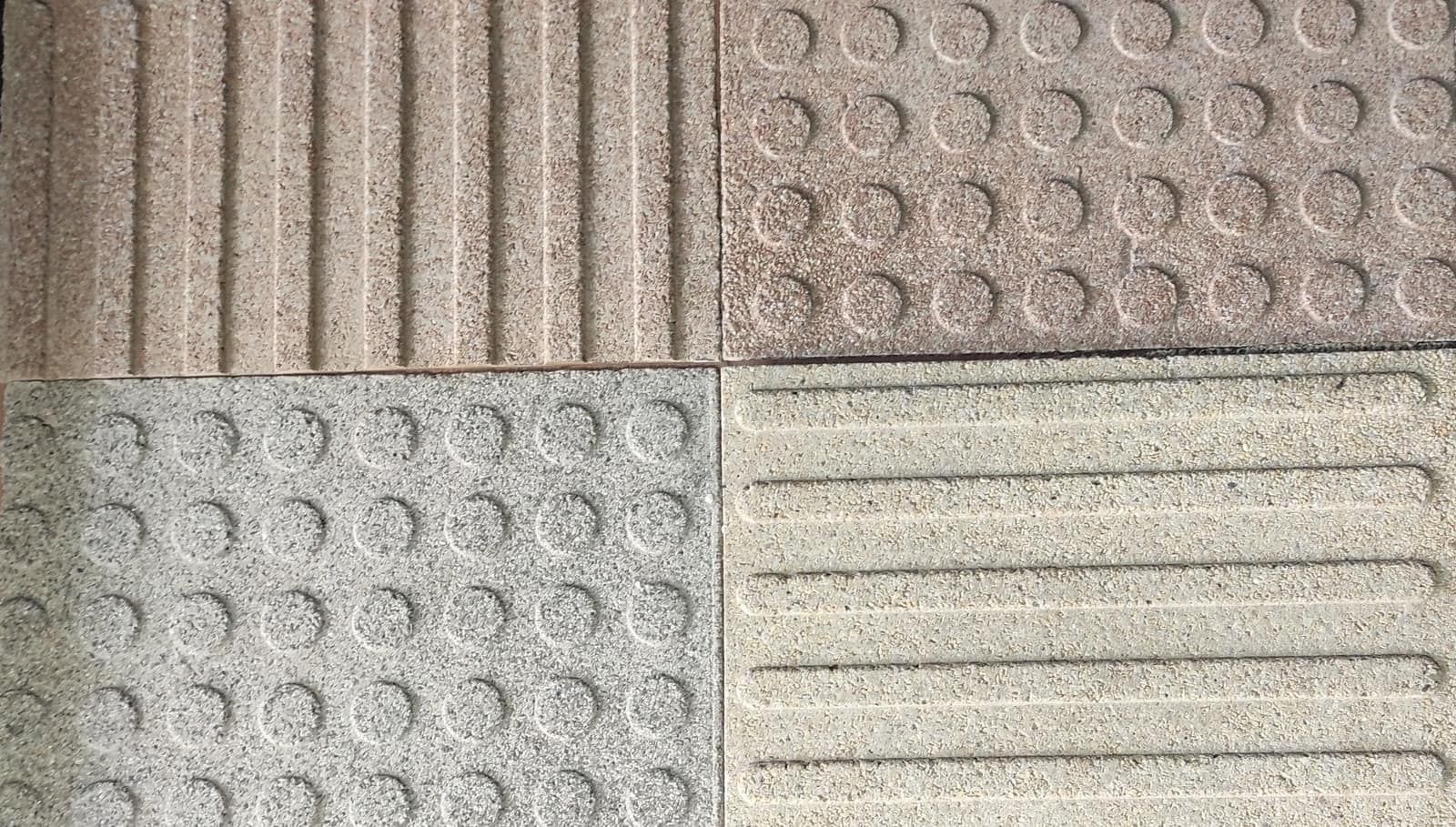
    Mosaic of Zoruflex tactile paving tiles in different colours and reliefs
    Zoruflex tactile paving · available colours and reliefs.
    FAQ · 04

    Frequently asked about tactile paving.

    What is tactile paving?
    Tactile paving is a textured ground surface that visually impaired pedestrians can detect with their cane or feet. It signals crossings, platform edges, stairs and route changes, providing accessibility information without relying on sight.
    What are the two main types of tactile paving?
    Blister (or warning) paving uses raised dots and signals attention points such as crossings and platform edges. Directional (or guidance) paving uses parallel bars and indicates the direction of travel along an accessible route. Both types can be combined at decision points.
    Where is tactile paving required?
    Pedestrian crossings, transport platforms, stair landings, ramps, public building entrances, accessible routes in plazas and parks, and any environment regulated by accessibility standards in the built environment.
    What standards govern tactile paving?
    European standard EN 17210 covers accessibility of the built environment. National regulations such as Spain's CTE DB-SUA and the UK's Department for Transport guidance define geometry, colour contrast and slip resistance for tactile surfaces in public spaces.
    Can tactile paving be installed over existing surfaces?
    Yes. Zoruflex tactile paving comes as preformed tiles bonded with technical adhesives over asphalt, concrete, existing tile or mixed substrates. The installation profile is defined according to the substrate, and timescales and disruption are assessed project by project.
    Let's talk about the project

    Specifying an accessible route?

    We design the tactile paving solution for your project — measurement, custom manufacturing and installation with minimal disruption.

    → Action

    Request a quote

    Start